The simple and short answer is yes
According to our experts, ceramic cookware is completely safe to use provided you purchased it from a reputable dealer. Credible manufacturers that produce certified ceramic cookwares for daily use are much less likely to make cookware sets with lead-related issues.
Whenever you think of the best non-stick pans, skillets and cookware, ceramics comes to mind. As you ponder on which is the best cookware set to use for your kitchen or wondering if ceramic cookware is really safe, here are the facts.
Ceramic cookware, also known as the stoneware, is recommended as one of the best alternatives non-sticky kitchen appliance when it comes to baking or cooking meals. It is widely considered to be the safest and most environmentally friendly option.
Ceramic nonstick pans that are produced without PFAS chemicals are safe to use. They generally have a better heat tolerance when compared to the conventional nonstick coating, they also do not emit toxic compounds when heated. When it comes to roasting and baking in the oven up to 450°F as well as searing and sautéing, the Always Pan is recommended.
According to industry expert Dr. Neal Saab, The Senior Scientific Program Manager at the Institute for the Advancement of Food and Nutrition Sciences (IAFNS). Ceramic pans are “generally considered safe if purchased from a known manufacturer, this is because most ceramic pans do not contain PFAS chemicals which can be found in some metallic nonstick pans contain. However, he also said that, “Consumers should avoid the temptation of purchasing shiny, glazed artisanal pottery for use as cookware. The bright glaze that makes them colorful is often due to high amounts of lead in the glaze.”
The Director of the Polymer and Food Protection Consortium and Associate Professor in the Department of Food Science and Human Nutrition at Iowa State University in Ames, IA, Dr. Keith Vorst says that fully ceramic or glass pans are considered safe alternatives, but we should keep in mind that they do tend to be pricier and less convenient for certain applications.
Why Ceramic Cookware is Safe
Why? because ceramic is free of PTFE (Polytetrafluoroethylene) and PFOA (Perfluorooctanoic).
Ceramic coatings come in a wide variety of styles and colours and since it a relatively new technology, there have been many advances in quality in recent years as manufacturers are applying more layers of ceramic to produce a thicker coating for a longer lifespan.
The purpose of creating ceramic cookware is to promote a healthier living and cookware. Unlike other non-stick coatings like Teflon, ceramic-coated pots and pans are resistant to high heat temperature and flaking.
A ceramic cookware is constructed of materials that are very durable; carefully crafted with a compound found in rocks and sand. They are made up of materials which are non-reactive, non-toxic, green and 100% natural minerals and this explains why the prices of some of them may be on the higher end.
While some argue that ceramic cookware has a short lifespan, that is yet to be proven, however, you might want to avoid cooking with oil, but if you must, cleaning with white vinegar can help make clean up a breeze.
Ceramic Cookware Safety Comparison
| Feature | Ceramic Cookware | Traditional Nonstick (PTFE/Teflon) | Cast Iron |
| Nonstick Surface | Yes, naturally | Yes, chemical-based | No (needs seasoning) |
| Chemicals Used | Usually free from PTFE, PFAS, PFOA, lead, cadmium (if quality brand) | PTFE, PFOA, PFAS | None |
| Risk of Toxic Fumes | No | Yes, at high heat (>570°F/300°C) | No |
| Risk if Scratched | May release nanoparticles or expose metals underneath | Can flake, releasing chemicals | Exposes iron |
| Reactivity with Food | Non-reactive | Non-reactive | Can react with acidic foods |
| Dishwasher Safe | Sometimes (check brand) | Sometimes (check brand) | Yes |
| Durability | Surface can wear over time | Surface can wear over time | Very durable |
| Induction Compatibility | Sometimes (check base) | Sometimes (check base) | Yes |
Ceramic Cookware Safety Factors
| Factors | Explanation | Safety Impact |
| Glaze Composition | Some glazes contain heavy metals like lead or cadmium. | High-quality brands are usually lead/cadmium-free. |
| Manufacturing Process | Poorly made ceramics might leach toxins. | Look for reputable, tested brands. |
| Temperature Handling | Ceramic coatings can degrade if overheated. | Use recommended temperatures for longevity. |
| Scratches & Chips | Chips in ceramic can expose underlying materials. | Avoid using damaged cookware. |
| Regulations & Standards | Look for certifications like FDA or EU food-safety standards. | Ensures compliance with safety standards. |
Why Ceramic Cookware is the Best Option
Ceramic cookware is so versatile that you can use it anywhere in the kitchen; on the stove top, pop it in the oven or place it under the broiler.
Besides having the FDA’s seal of approval as a safe alternative for food storage, the following are the reason ceramic coated pots and pans remains the best option for your cooking
- It is durable, unbreakable and recyclable materials.
- It can be used in a variety of ways, from food storage in the refrigerator or freezer to reheating in the oven or microwave.
- It’s also dishwasher safe, making it super easy to clean and store.
- Ceramic cookware doesn’t stain or hold flavours from foods.
- It quickly disperses heat and is safe around children who might want to help with cooking in the kitchen.
- It can withstand high oven temperatures above 450 F and won’t leach harmful chemicals into your foods while they cook in the oven, microwave or toaster oven.
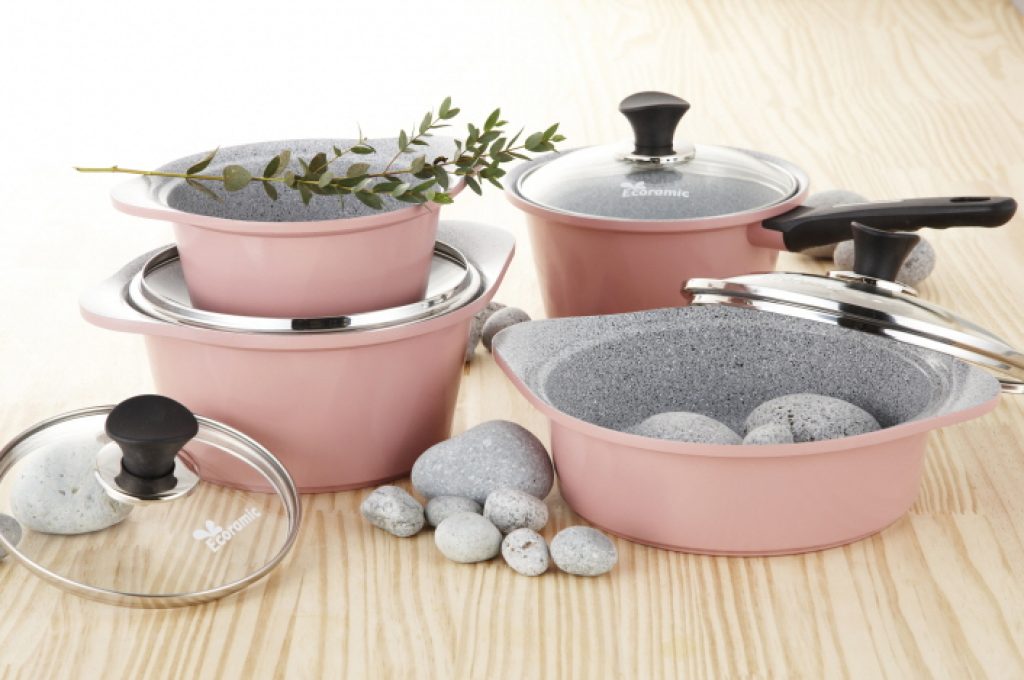
How to extend the life of a ceramic coated non-stick pan
Nothing last forever right? But as much as you anticipate the day your ceramic cookware will lose its lustre, there are ways to extend the lifespan.
- First, use plastic or wooden spoons to stir foods cooking inside your ceramic pot/pan. Metal utensils can chip or scratch the ceramic surface, making the non-stick surface less non-stick.
- Wash using only a mild detergent in hot water with a dishcloth or sponge. Avoid scouring pads of any type
- Don’t make the pan go from hot to cold too quickly
- Wash by hand – even if the manufacturer says its dishwasher safe.
- Cook on low to medium heat.
To be more elaborate, ceramic coated cookware should, in theory, be ok with higher heat, however, be careful with sudden temperature changes, that is, from high to low or low to high. That could make the ceramic coating shatter or crack.
Well, these are some of the suggestions.
Choosing the Best Ceramic Cookware
Budget: If you’re a psych for the best/quality things, then purchase the ceramic cookware, but of course one your budget will allow. Cookware is an investment and will last for many years, so you don’t have to worry about laden your budget for another couple of years.
Material: this is the second most important consideration once you know what your budget will allow. The best ceramic cookware will give you exceptional uniform conduction with no hot spots, scorching, or food reactions to change colour and taste.
So long you’re able to differentiate between Pure Ceramic Cookware with 100% ceramic cookware is generally made from clay, minerals and quartz sand. Xtrema and Emile Henry are currently the most reputable brands of pure ceramic cookware.
Ceramic Coated Pots and Pans are made of a metal such as aluminium that is coated with a hard film of polymer materials with a ceramic appearance. his non-stick coating is not permanent and degrades even under normal use leading to exposure of the metal base. Depending on the care and frequency of use of this cookware, it lasts about 3 to 5 years.
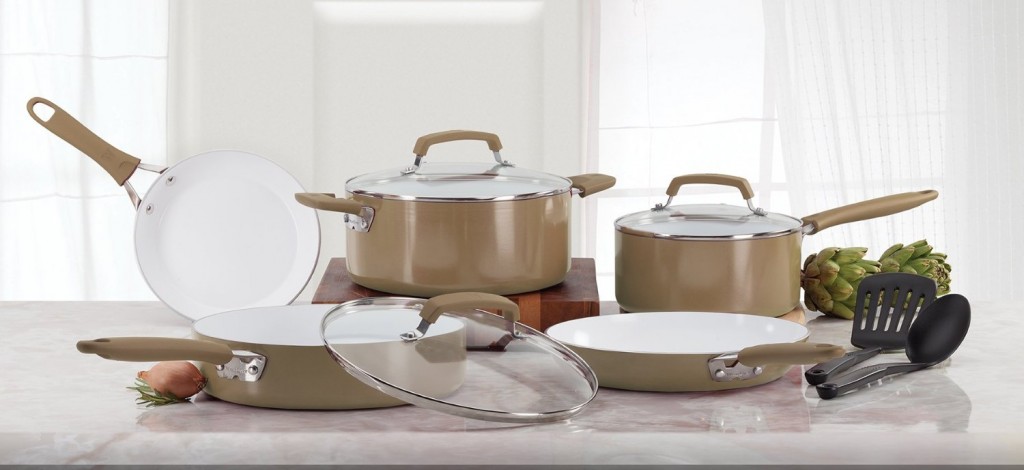
Whether you cook because you love to or because you must, every cook wants hassle-free, durable, and easy to clean cookware to sear, sauté, fry, brown, stir-fry, and braise, boil, stew, and simmer.
Pros and Cons of Ceramic Cookware
| Pros of Ceramic Cookware | Cons of Ceramic Cookware |
|---|---|
| Free from PTFE, PFOA, and PFAS | Surface can chip or wear out over time |
| Nonstick and easy to clean | Not always dishwasher safe |
| Non-reactive with acidic foods | May stain if food is burned on |
| Retains heat well and cooks evenly | Not all brands are free from heavy metals |
| Can be used on various cooktops | Scratched pans may release nanoparticles |
PFAS, PTFE, PFOA: What Exactly Do They Mean?
If you have ever purchased a nonstick cookware or read about possible environmental health concerns from the use of nonstick cookware, there’s a chance you’ve come across terms like PFAS, PTFE, and PFOA. What do they really mean?
PFAS:
Per- and polyfluoroalkyl substances (PFAS) are a group of man-made chemicals that have been used in various consumer products around the world since the 1940s. They are also known as “forever chemicals” because they don’t break down easily and can accumulate in the environment and our bodies over a period of time. Apart from nonstick cookware, they can be found in many other everyday items such as waterproof clothing, stain-resistant furniture, and cosmetics.
I first got to know about PFAS while reading a news article about their presence in water supplies. It was pretty eye-opening to learn that these chemicals are also found in so many everyday products, from waterproof clothing to food packaging. It made me pause and take a closer look at what I was using at home.
PTFE
Polytetrafluoroethylene (PTFE) is actually a type of PFAS, it is the chemical most of us know as Teflon—the stuff that makes our frying pans nonstick. It is a pretty clever invention that allows us to flip pancakes and cook with less oil without making a mess. Many traditional nonstick pans contain PTFE, which if overheated, can release toxic fumes that may cause flu-like symptoms in humans and death to birds.
PFOA
Perfluorooctanoic acid (PFOA) is another chemical in the PFAS family, and it was traditionally used to manufacture PTFE. The problem with PFOA is that it was linked to various health issues, including cancer, hormonal disruptions, birth defects, liver damage, and developmental problems. Due to these concerns, it’s been phased out in many countries, but it can still be found in older products.
When I realized my trusty old nonstick pan was made before the PFOA phase-out, I decided it was time for an upgrade. I couldn’t help but think of all the family meals I had prepared using that pan: Were we exposed to harmful chemicals? It is a disconcerting thought but a good reminder of why staying informed is so important.
How Do They Affect Us?
These chemicals are big deal because they can contaminate our water, air, and even food. Once they enter our bodies, they can stay there for a long time. Studies have shown that almost everyone has some level of PFAS in their blood, and that’s pretty scary.
I started looking into water filters specifically designed to remove PFAS after I realized how widespread they were in water supplies across the country. It felt good to take a small step to protect my family, but it’s still frustrating to think these chemicals are so pervasive.
What Can We Do About It?
If you are like me and want to minimize exposure to some these chemicals, consider using only cookware labeled PFAS-free or stainless steel, which doesn’t have these chemicals. Checking your water supply for contamination and opting for a robust filtration system can also help.
Understanding what these chemicals mean, where you can find them, and how you can reduce the exposure can feel overwhelming, but it is the right step towards making safer choices. After all, it is those little changes, like replacing an old pan or investing in a good filter, that can make a big difference in the long run, take it from someone who’s been there.
Frequently Asked Questions
Is ceramic cookware better than Teflon?
Ceramic cookware provides a safer cooking option because it does not contain PTFE or PFOA substances which Teflon-coated pans release when overheated.
Does ceramic cookware release toxic substances into food during cooking?
High-quality ceramic cookware products that follow safety standards will not release toxins. You are advised to always purchase cookware from trusted brands and avoid cracked or chipped cookware.
What steps can I take to verify the safety of my ceramic cookware?
Check for FDA approval and EU regulatory compliance through certifications. The cookware must contain no lead or cadmium substances.
How long does ceramic cookware typically last?
Proper care of ceramic cookware can extend its lifespan to 2-5 years or more. You are advised to avoid using metal utensils that can scratch the surface.